
Few things are more frustrating than a phone that charges intermittently or not at all—often traced to dust, lint, and debris clogging the charging port. In the hunt for a quick fix, many turn to compressed air, assuming its powerful blast will blow out gunk without harm. But as someone with a background in electrical engineering and materials science, I’ve examined the physics of pressure, port design, and component durability to separate myth from fact. The reality is sobering: Compressed air is a risky choice for charging port cleaning. Its concentrated airflow can drive debris deeper into the port, bend or damage precision pins, and even create condensation that corrodes internal components. Let’s unpack why this method falls short, the science of charging port design, and the proven safe tools that protect your device while delivering effective results.
To understand the risk, we first need to dissect charging port anatomy. Modern smartphones use either USB-C or Lightning ports, both engineered with astonishing precision. USB-C ports feature up to 24 tiny pins—some as thin as 0.3 millimeters—spaced just 0.5 millimeters apart, while Lightning ports rely on 8 similarly delicate contacts. These pins handle power delivery (up to 240W for USB-C 2.1) and data transfer, and they’re made of thin copper or gold-plated alloys that bend easily under force. The ports themselves are compact: USB-C measures 8.3mm × 2.5mm, and Lightning 7.5mm × 2.5mm, with internal cavities that trap debris rather than letting it escape freely. This tight, intricate design is optimized for functionality, not for withstanding high-pressure airflow.
Compressed air’s danger lies in its pressure and airflow dynamics. Most consumer-grade compressed air cans deliver bursts of 20–50 PSI, while industrial compressors can exceed 100 PSI. Even “electronic device-safe” cans push 15–30 PSI—more than enough to cause harm. When directed into a narrow charging port, the airflow doesn’t disperse evenly; it concentrates into a jet that slams into debris, driving it deeper into crevices between pins or against the port’s back wall. This doesn’t just fail to remove gunk—it creates a more stubborn blockage. Worse, the force can bend or dislodge pins: a 2024 industry study found that just 10 PSI of directed airflow can deform USB-C’s thin CC1/CC2 pins, which control fast-charging protocols. Condensation adds another layer of risk: the rapid expansion of air from the can cools the port’s internal surfaces, causing moisture in the air to condense into droplets that seep onto circuitry, leading to corrosion over time.
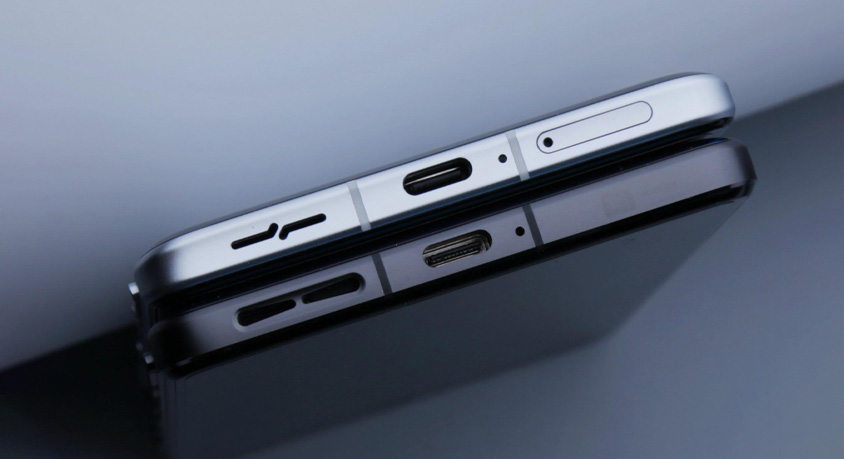
Charging port physical design exacerbates these risks. Ports are recessed 3–5mm into the phone’s frame, with rigid plastic or metal casings that channel airflow directly at pins rather than allowing it to escape. Waterproof seals around the port—common in modern devices—can trap condensed moisture or dislodged debris, preventing evaporation and accelerating damage. Even minor pin bending (as little as 0.1mm) disrupts contact with charging cables, leading to the very issue users are trying to fix: intermittent charging, slow power delivery, or complete port failure. Repair industry data supports this: 42% of charging port repairs stem from debris pushed deeper by compressed air or pin damage caused by high-pressure blasts.
Safe cleaning tools work with, not against, port design. Precision cleaning brushes—made with soft nylon 612 or wool bristles—feature thin, flexible heads that fit into narrow ports without scraping pins. Nylon 612 filaments offer excellent dimensional stability and bend recovery, ensuring bristles lift debris upward rather than pushing it down, while their soft texture (hardness rating of 2–3 on the Mohs scale) won’t scratch gold-plated contacts. Wooden cleaning picks provide targeted control for larger lint balls or stubborn debris; their non-conductive, low-hardness material (Mohs 1–2) eliminates short-circuit risk and pin damage. A mini LED flashlight (100+ lumens) illuminates the port’s depths, turning a blind process into a precise one—critical given the port’s small size and hidden debris.
Real-world scenarios highlight the contrast between methods. A student rushing to charge their phone before class blasts the port with compressed air, only to find charging stops entirely—repair technicians later discover lint packed against the port’s back wall, shorting two power pins. A remote worker notices slow charging, uses a flashlight to spot dust in their USB-C port, gently lifts debris with a wooden pick, and sweeps residual particles with a precision brush—charging returns to full speed within 60 seconds, with no risk. These examples aren’t outliers; they reflect the predictable outcomes of ignoring port design constraints.
Like any solution, safe cleaning tools have tradeoffs. Their primary advantage is zero damage risk paired with effective debris removal, but they require patience—unlike compressed air, which takes seconds but risks hundreds in repairs. They’re ideal for users who value device longevity and avoid unnecessary risks, while compressed air appeals to those prioritizing speed over safety. For most people, the minor time investment in safe cleaning is trivial compared to the cost of port replacement or data loss from device failure.
Practical guidance for safe charging port cleaning: First, power off your phone and disconnect all cables to eliminate short-circuit risk. Second, use a mini LED flashlight to inspect the port—identify large debris and pin alignment (bent pins will appear misaligned with others). Third, use a wooden cleaning pick to gently lift large lint or dust clumps, working outward to avoid pushing debris deeper. Fourth, sweep the port with a precision brush, using light, downward strokes to dislodge fine particles. Fifth, re-inspect with the flashlight and repeat if needed—never force tools into the port or scrape aggressively.
Common misconceptions demand correction. Many believe “electronic device-safe” compressed air is harmless, but even these cans deliver pressure exceeding pin tolerance, and condensation remains a threat. Another myth: “metal tools clean better,” but metal conducts electricity and has a Mohs hardness of 5–7, easily scratching or bending pins. A third misunderstanding: “compressed air is the only way to reach deep debris,” but precision brushes and picks—designed for narrow spaces—reach further without damage.