
Picture this: you’re trying to open an app, send an email, or just browse the web on your phone or laptop. It stutters. It freezes. The battery icon mocks you with its rapid descent. In a world where every tech ad screams about "revolutionary new chips" and "unprecedented speed," your first thought is probably, "Ah, it's time. This old dog can't keep up. Time for a shiny new upgrade!"
Hold your horses, folks. As someone who’s spent more years than I care to admit knee-deep in circuit boards and supply chain spreadsheets, I'm here to tell you that this knee-jerk reaction often leads us straight into a costly trap. That feeling of your 2-3 year old device "dying" isn't always because its brain (the CPU) or its short-term memory (RAM) has suddenly forgotten how to do its job. More often than not, it’s like blaming your car's engine when the tires are flat and the trunk is full of junk.
Let’s talk about operating system bloat. You know, those updates that promise "enhanced features" but somehow make everything feel a tad heavier? Every new version of Android, iOS, Windows, or macOS tends to add layers of complexity, new animations, and background services that silently chew away at your resources. While your device's core hardware might still be perfectly capable, it's now carrying an increasingly heavy software backpack. Imagine running a marathon with an extra 20 pounds – you'd feel slower, right? It's not that your legs got weaker; it's the extra burden.
Then there’s the issue of what you’ve accumulated. Think of your device as a digital attic. Over the years, you install apps, download files, snap thousands of photos, and sign up for countless services. Many apps, even when closed, leave processes running in the background, constantly checking for updates, notifications, or tracking your location. It’s like having a dozen conversations happening in your living room simultaneously; eventually, things get chaotic and slow down. Studies have shown that simply uninstalling unused apps and clearing cache can restore a significant percentage of perceived performance on mobile devices.
Storage bottlenecks are another silent killer. If your phone or laptop's internal storage (especially for older models using eMMC instead of UFS or NVMe) is nearly full, it drastically slows down operations. When the system needs to temporarily store data or swap files, it struggles to find space, leading to frustrating delays. It's like trying to move furniture in a house that's already packed to the rafters – every step is a struggle. Upgrading to a new device often just gives you more empty space, temporarily solving the problem until you fill that one up too.
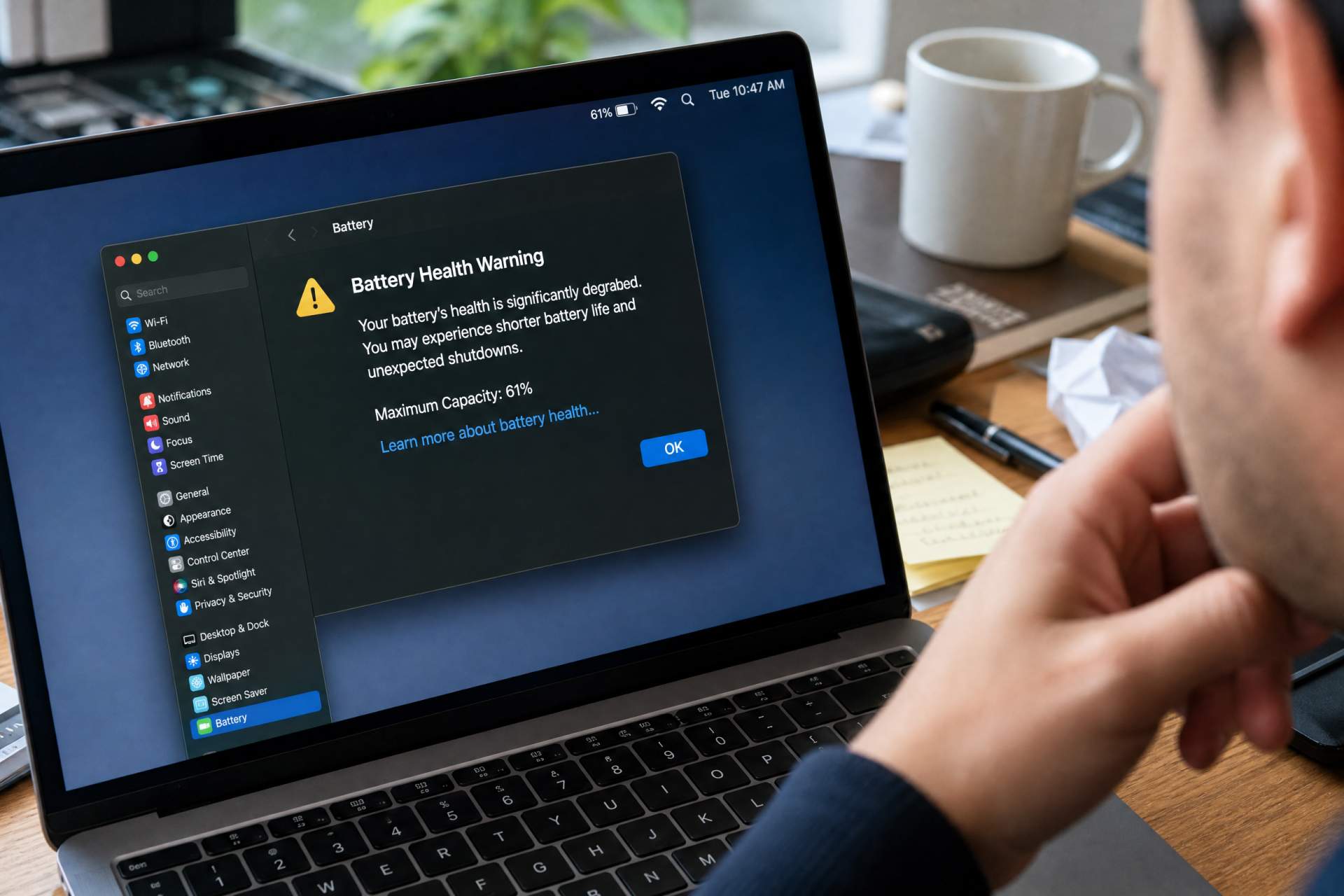
And let’s not forget the battery. This is a big one. A degraded battery doesn't just mean less screen time; it can actively throttle your device's performance. As batteries age, their ability to deliver peak power diminishes. To prevent unexpected shutdowns, your device’s operating system might deliberately slow down the CPU, making everything feel sluggish. It’s a protective measure, but for you, it feels like your device is on its last legs. A simple battery replacement, which often costs a fraction of a new device, can breathe new life into an otherwise perfectly capable phone or laptop. For instance, many flagship phones from 3-4 years ago still boast CPUs powerful enough for daily tasks, but their batteries are often the weakest link.
So, for most of us, especially those not editing 8K video on the go or rendering complex 3D models, your 2-3 year-old smartphone or laptop's core processing power is far from obsolete. It's not about the CPU "not keeping up" with modern software; it's about software not being efficient or your digital habits burdening the hardware. Before you drop hundreds, if not thousands, on a new gadget, consider a digital declutter, a factory reset, or a battery swap. You might just find that your "old" device still has plenty of miles left, saving your wallet and the planet from unnecessary e-waste. It's about letting technology serve you better, not constantly chasing the next big upgrade.